A Littel about San Francisco
San Francisco is a beautiful city that is really worth visiting. Also known City by the bay is one of the most liberal cities in the United States. It has a unique combination of shops, culture and neighborhoods that make it unlike any other city anywhere else in the world. Thousands of tourists visit the city every year attracted by its steep rolling hills that are climbed by the famous cable cars, the chilly summer fog, the fabulous mix of modern and traditional architecture and of course because of San Francisco's word famous landmark, the Golden Gate Bridge, Chinatown, Golden Gate Park, and Fishman's Wharf. These are the place you should go to visit when you come to San Francisco.
|
Golden Gate Bridge - symbol of San Francisco
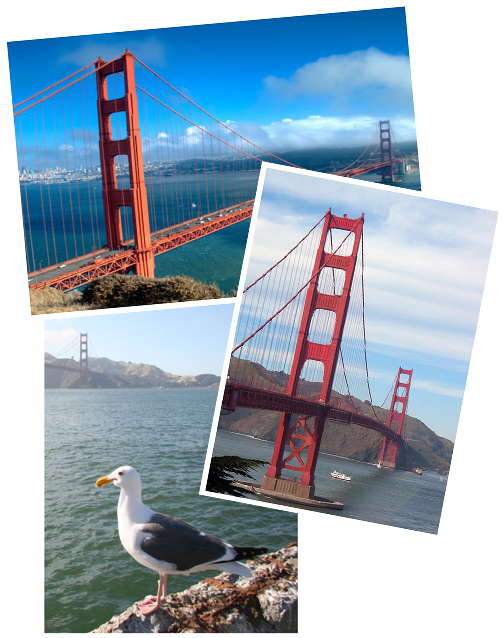 The Golden Gate Bridge is a suspension bridge spanning the Golden Gate, the opening of the San Francisco Bay into the Pacific Ocean. As part of both U.S. Route 101 and California State Route 1, the structure links the city of San Francisco, on the northern tip of the San Francisco Peninsula, to Marin County. It is one of the most internationally recognized symbols of San Francisco, California, and of the United States. It has been declared one of the modern Wonders of the World by the American Society of Civil Engineers. The Frommers travel guide considers the Golden Gate Bridge "possibly the most beautiful, certainly the most photographed, bridge in the world". The Golden Gate Bridge is a suspension bridge spanning the Golden Gate, the opening of the San Francisco Bay into the Pacific Ocean. As part of both U.S. Route 101 and California State Route 1, the structure links the city of San Francisco, on the northern tip of the San Francisco Peninsula, to Marin County. It is one of the most internationally recognized symbols of San Francisco, California, and of the United States. It has been declared one of the modern Wonders of the World by the American Society of Civil Engineers. The Frommers travel guide considers the Golden Gate Bridge "possibly the most beautiful, certainly the most photographed, bridge in the world".
It is the most beautiful spots to visit, and good place to take pictures. Not only for tourists go there. People who grown up San Francisco say: they're a big part of why I still live here. Views of a placid blue bay, stern, dark cliffs, and a white city.
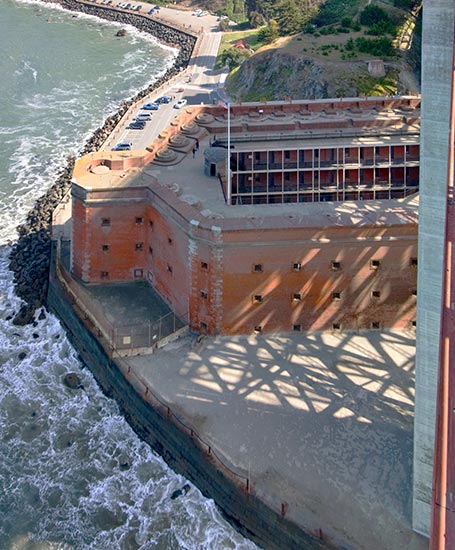
Fort Point is located at the southern side of the Golden Gate at the entrance to San Francisco Bay. This fort was completed just before the American Civil War, to defend San Francisco Bay against hostile warships. The fort is now protected as Fort Point National Historic Site, a United States National Historic Site administered by the National Park Service as a unit of the Golden Gate National Recreation Area. Spain had built an adobe structure on top of a white cliff at Fort Point's current location in 1793–94. Castillo de San Joaquin had been long abandoned by the time a group calling themselves the Bear Flag Revolt captured it and spiked its cannons in 1846. Several of those cannons were successfully re-vented by Captain John B. Montgomery of the USS Portsmouth later that same year. Several of these 300-year-old smooth-bore cannons are now on display in San Francisco's Presidio.
|
Chinatown - exciting and mysterious neighborhood
San Francisco Chinatown is the largest Chinatown outside of Asia as well as the oldest Chinatown in North America. It is one of the top tourist attractions in San Francisco. You can use this site to learn more about the attractions, culture, history, and events in Chinatown. If you plan to visit us, you can book a Chinatown tour, hotel rooms, and more.
Touring Chinatown
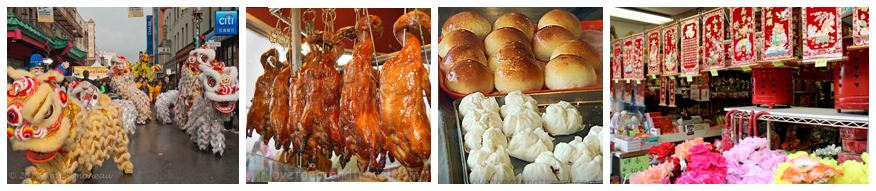
Many visitors head to Chinatown to explore its unique shops, restaurants, and the overall culture of the area. Most of the shops are located around Grant Street, the central axis of Chinatown's tourist area. Here all lampposts are ornamented with colorful Chinese motives and the many tourists jostle for space on the narrow sidewalks along the many souvenir shops, eateries and herbal shops. Daily, visitors and residents flock to Chinatown to buy fresh produce, fish, meat, manapua, candied fruits and vegetables, noodles, tea, duck eggs, char siu and other Asian delicacies. At noon, people in the downtown business community flock to the nearby area for dim sum, or lunch at one of the delicious and inexpensive specialty restaurants.
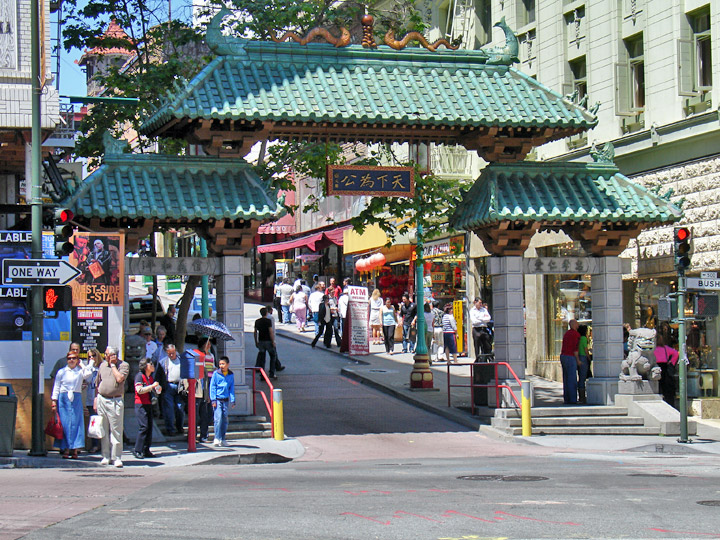 The entrance gate to Chinatown is also located at Grant Street. Grant Avenue is one of the oldest streets in Chinatown. Originally, it was named Calle de la Fundacion (street of the founding) in 1845 in the pueblo of Yerba Buena. When California was ceded to the Union in 1846, the street was renamed Dupont Street, honoring an admiral from the USS Portsmouth. By the late 1800s, the street had gained an unsavory reputation being part of the Barbary Coast Trail along with The entrance gate to Chinatown is also located at Grant Street. Grant Avenue is one of the oldest streets in Chinatown. Originally, it was named Calle de la Fundacion (street of the founding) in 1845 in the pueblo of Yerba Buena. When California was ceded to the Union in 1846, the street was renamed Dupont Street, honoring an admiral from the USS Portsmouth. By the late 1800s, the street had gained an unsavory reputation being part of the Barbary Coast Trail along with 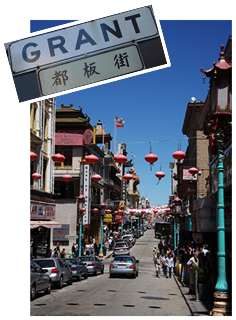 Tong wars, sing-sing girls, and opium dens. After the 1906 earthquake, Dupont Street was upgraded and its image changed. It was changed to Grant Avenue to honor President Ulysses S. Grant, the 18th president of the United States. Some older members of the Chinese community still call it "Du Pon Gai". Gai means "street" in Chinese. Today, Grant Avenue at Bush Street houses the southern gateway to Chinatown. Stepping through the gateway is like walking into a whole new world. The street is lined with dragon-entwined lamp posts and calligraphy street signs. Shops filled with food, herbs, porcelains, furniture, fabrics, and trinkets from China, Hong Kong, and Taiwan. The architecture along Grant Avenue varies widely from Old St. Mary's to the Sing Chong Building. Chinatown officially ends at Broadway Street. Tong wars, sing-sing girls, and opium dens. After the 1906 earthquake, Dupont Street was upgraded and its image changed. It was changed to Grant Avenue to honor President Ulysses S. Grant, the 18th president of the United States. Some older members of the Chinese community still call it "Du Pon Gai". Gai means "street" in Chinese. Today, Grant Avenue at Bush Street houses the southern gateway to Chinatown. Stepping through the gateway is like walking into a whole new world. The street is lined with dragon-entwined lamp posts and calligraphy street signs. Shops filled with food, herbs, porcelains, furniture, fabrics, and trinkets from China, Hong Kong, and Taiwan. The architecture along Grant Avenue varies widely from Old St. Mary's to the Sing Chong Building. Chinatown officially ends at Broadway Street.
Cable cars to Chinatown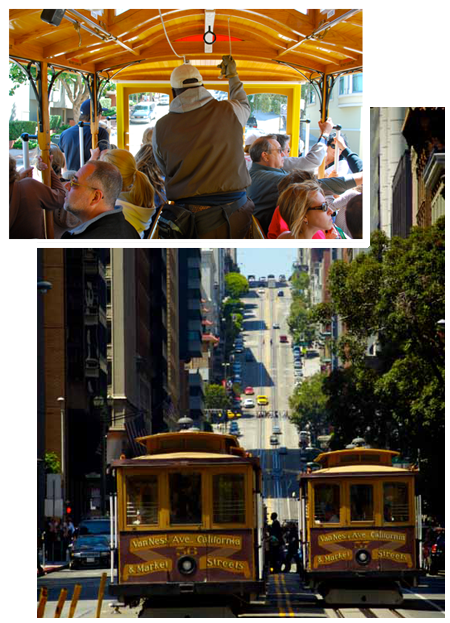
For the visitor, San Francisco cable cars are not a means of transportation but a destination, one of the things one has to "see" if they go to the City by the Bay. They also provide transportation to many of the city's most popular areas. The California Street line intersects the other two lines at California and Powell. It runs from the terminus at Market and Drumm through the Financial District, Chinatown, and Nob Hill before reaching its other terminus at Van Ness Avenue. This line tends to be less crowded than the other two, though no less fun, and as a result, you can usually just stay on at the end of the line and ride back, instead of having to get out and get in line to come back on, as you may on the other two lines during summer. From this line, you can get out at Grant Avenue or other stops and enjoy Chinatown. |
Golden Gate Park - dizzying array of treasures
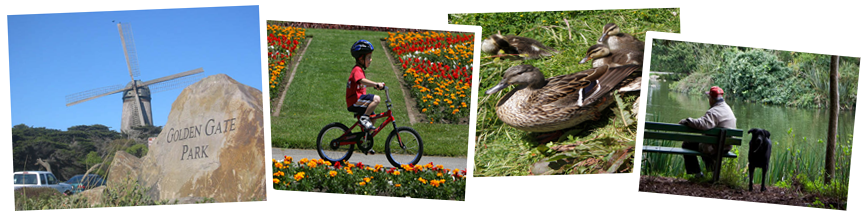 Golden Gate Park is one of the most popular attractions in San Francisco. If you get a chance to visit the city, you should definitely make it a point to check out this wonderful spot of nature right in the heart of San Francisco. Golden Gate Park is the third most visited park in the United States. While the park is free to visit during the day, popular attractions charge admission, such as deYoung Museum, California Academy of Sciences and Conservatory of Flowers. Golden Gate Park is one of the most popular attractions in San Francisco. If you get a chance to visit the city, you should definitely make it a point to check out this wonderful spot of nature right in the heart of San Francisco. Golden Gate Park is the third most visited park in the United States. While the park is free to visit during the day, popular attractions charge admission, such as deYoung Museum, California Academy of Sciences and Conservatory of Flowers.
Inside of California Academy of Sciences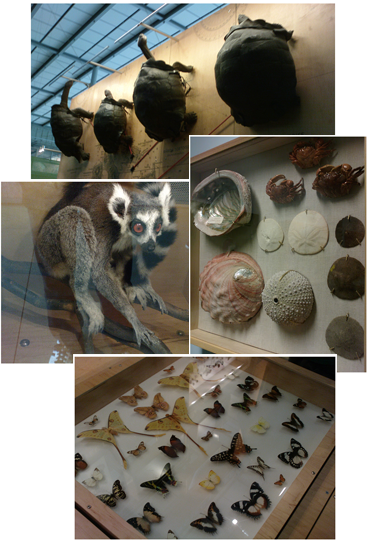
The academy contains the Kimball Natural History Museum, the Morrison Planetarium, the Steinhart Aquarium and a four-story rainforest dome, and is home to 38,000 living animals from 900 species. It is renowned for its educational programs and focuses on 11 scientific fields, so there's something interesting for a visitor of any age.
Steinhart Aquarium, public aquarium in Golden Gate Park, San Francisco, noted for its innovative displays. The facility was opened in 1923 and is administered by the California Academy of Sciences. Besides having about 5,000 specimens of some 350 species of fish, the aquarium maintains a collection of more than 200 kinds of reptiles and amphibians, along with 3 species of marine mammals and 60 species of marine invertebrates. There are many different animal species to see including strange creatures like jellyfish and leafy sea dragons. Also, you can see some fascinating creatures which only live in the deep sea. For example, a tank makeover, a "living fossil" species alive more than 400 million years ago.

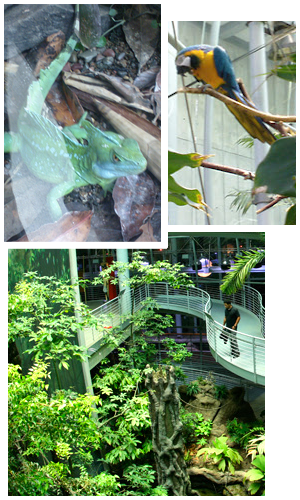
Rainforests of the World
The Rainforests of the World exhibit is contained within a glass dome that is 90 feet tall. Guests move through the exhibit by circling up a gently sloping ramp. Plants and animals have been carefully chosen to represent specific habitats in nature. Temperatures are maintained at 82-85F, and humidity is maintained at 75% or above using a special misting system. Lighting is provided from skylights in the roof and metal halide lamps. The live animals in the Madagascar rainforest exhibit include species that are unique to this threatened environment, including colorful forest frogs, bright green geckos and chameleons, and endangered Malagasy freshwater fish. Under the domed skylights, the Costa Rica rainforest canopy features reptiles, amphibians and insects, as well as free flying birds and butterflies. |
Fishman's Wharf - a bustling waterfront for all ages
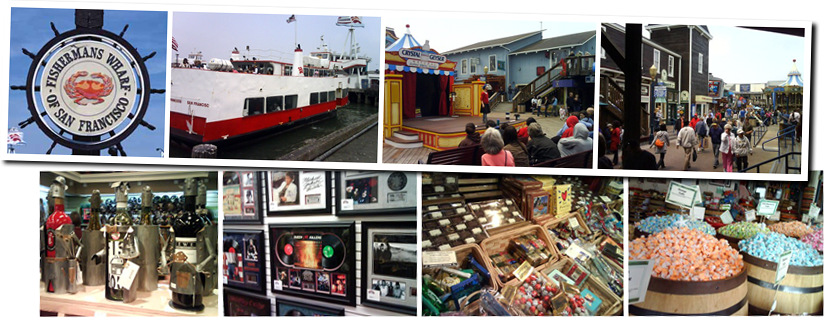
Fisherman's Wharf is San Francisco's most popular destination. Known for its historic waterfront, delicious seafood, spectacular sights and unique shopping, Fisherman's Wharf offers a wide array of things to do for everyone. Family fun at Fisherman's Wharf makes it one of the most frequented tourist destinations in the U.S. Fisherman's Wharf is the area of San Francisco, California along the city's northern waterfront piers. It stretches between Ghirardelli Square (east of Pier 41) and Pier 35. Home to a variety of shops and restaurants, many people, especially children, absolutely love Fisherman's Wharf for its concentration of extremely popular tourist attractions, all located in one area.
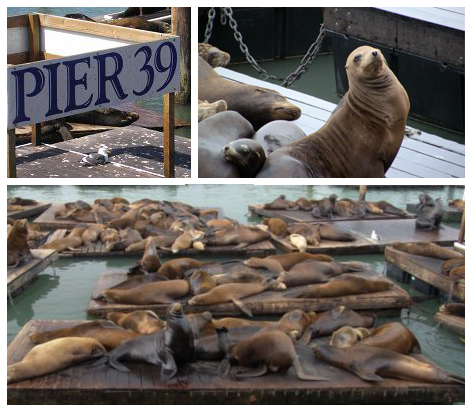 Sea Lions in PIER 39 Sea Lions in PIER 39
The Sea Lion Story The sea lions that camped out in PIER 39's West Marina have been an international sensation for more than 20 years. A few California sea lions began "hauling out" in PIER 39's West Marina shortly after the 1989 San Francisco Loma Prieta earthquake. The boisterous barking pinnipeds started arriving in droves and took over K-Dock in January 1990. At first they numbered from 10-50, but due to a plentiful herring supply, the available dock space and protective environment, the population soon grew to more than 300 in a couple months.
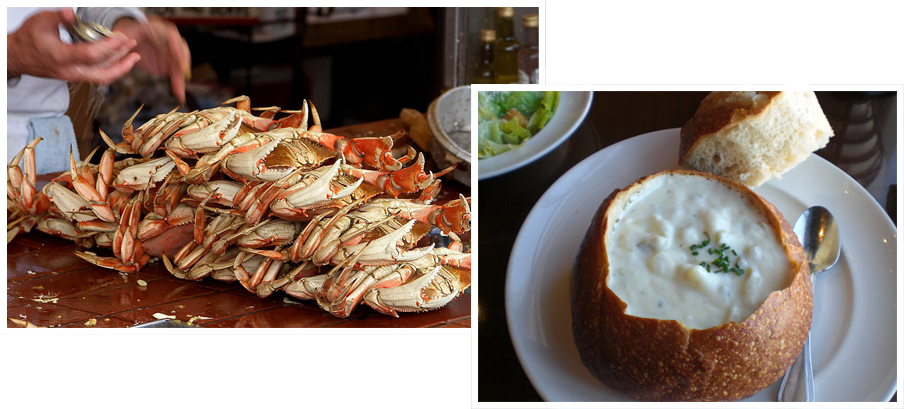 Seafood at Fisherman's Wharf Seafood at Fisherman's Wharf
Fisherman's Wharf is synonymous with Dungeness crab; the sweet crustacean thrives in San Francisco's cold Pacific waters. Located on the waterfront near North Beach, Fisherman's Wharf features clam chowder in sourdough bowls from street vendors to classic San Francisco seafood restaurants with stunning views of the Golden Gate Bridge and the steady flow of fishing boats. With a long history of Italian-American fisherman, restaurants in Fisherman's Wharf have a decidedly Italian slant. |